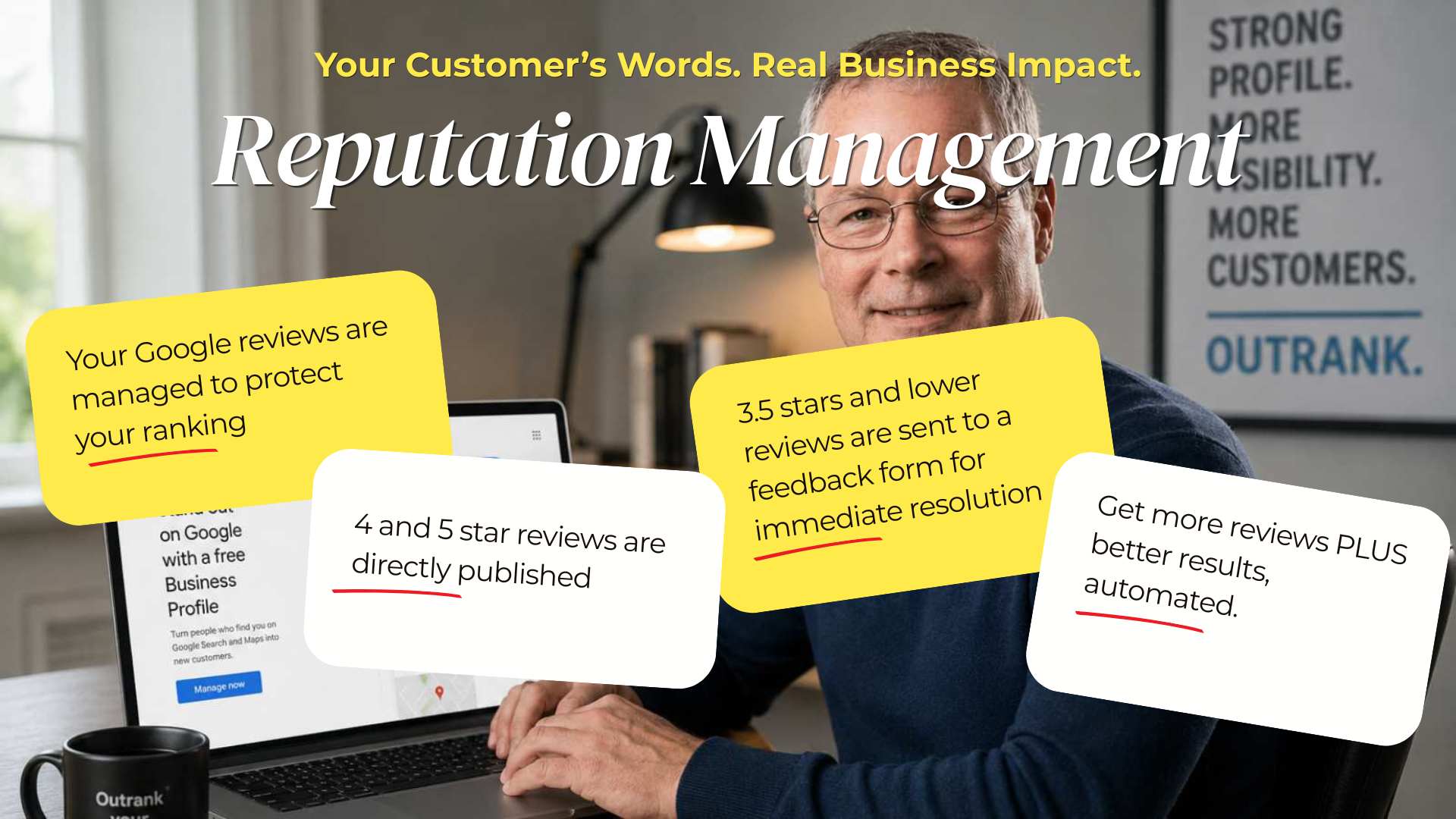

Most local business owners in York Region know that bad Google reviews are not ideal. What many do not realize is just how much those reviews are costing them in real dollars, lost customers, and missed opportunities they never even see.
The impact goes far beyond one unhappy customer venting online. It affects who finds you in search, whether they click on your listing, whether they walk through your door, and even whether top candidates want to work for you. The compounding cost of unmanaged negative reviews is one of the most expensive invisible problems a local East Gwillimbury business can have.
The customer you never knew you lost
This is the cost that is hardest to see and easiest to ignore. A potential customer searches for a service you provide, sees your listing alongside two competitors, notices your 3.6-star rating next to their 4.5 and 4.7, and clicks on one of them instead. You never get the call. You never get the visit. You have no idea it happened.
Research has consistently shown that the vast majority of consumers read online reviews before visiting a local business. Most will not even consider a business with a rating below four stars. That means if your rating has dipped below that threshold, you are being filtered out of the decision-making process before you even get the chance to compete.
This is not a slow leak. It is a tap that is running every single day.
Google uses your reviews to decide where you rank
Your Google review profile is not just a customer-facing element. It is one of the signals Google uses to determine your local search ranking. Businesses with higher ratings, more recent reviews, and active owner responses tend to appear higher in the local map pack, which is the three-listing block that appears at the top of local search results.
That map pack is where the majority of local search clicks happen. If your reviews are pulling your ranking down, you are not just losing credibility with customers. You are losing visibility with Google. Fewer people see your listing, which means fewer clicks, which means fewer calls and visits, which means fewer new reviews. It becomes a downward cycle that gets harder to reverse the longer it goes unaddressed.
The math behind one star
Multiple studies across different industries have found that a one-star improvement in a business’s average review rating correlates with a five to nine percent increase in revenue. For a business doing half a million dollars in annual revenue, that single star could represent twenty-five to forty-five thousand dollars per year.
Now think about it from the other direction. A one-star drop, which can happen surprisingly fast when a few bad reviews land in a short window, represents the same potential loss. And because negative reviews carry more psychological weight than positive ones, the actual customer impact may be even steeper than the numbers suggest.
Unanswered reviews signal neglect
A bad review by itself is damaging. A bad review with no response from the business owner is devastating. When a potential customer sees a string of negative reviews with no replies, the message they receive is clear: this business either does not care or is not paying attention.
Responding to reviews, especially negative ones, is one of the most cost-effective things a local business can do. Research shows that businesses that respond to reviews are perceived as significantly more trustworthy than those that do not, even when the overall star rating is the same. The response itself becomes the trust signal.
The problem is that most business owners are too busy actually running their business to check and respond to reviews across multiple platforms every day. That is where the gap between knowing what you should do and actually doing it turns into a real financial cost.
It affects your ability to hire
This is the cost that surprises most business owners. Job seekers read reviews just like customers do. A business with consistent complaints about poor service, management problems, or a bad work environment is going to struggle to attract quality applicants, regardless of the pay rate.
In competitive local labour markets, especially for trades, healthcare, hospitality, and professional services, your online reputation is part of your employer brand whether you manage it or not. The best candidates have options, and they will choose the business that looks like a better place to work.
Bad reviews compound over time
One negative review among fifty positives barely moves the needle. But reviews do not arrive on a schedule, and they do not distribute themselves evenly. A bad month, a staffing issue, a supply chain problem, or even a single difficult customer interaction can result in a cluster of negative reviews that drags your rating down quickly.
Without a system to actively generate new positive reviews, recovery is painfully slow. The math works against you: if your rating drops from 4.5 to 4.0 because of a few bad reviews, you might need twenty or thirty new five-star reviews just to get back to where you were. That does not happen organically for most businesses. It requires an intentional, systematic approach to review generation.
What proactive review management actually looks like
The businesses that maintain strong reputations are not the ones that never receive a bad review. They are the ones that have a system in place to manage their entire review lifecycle. That system typically includes four components.
First, monitoring. Every review across every platform is tracked in one place so nothing falls through the cracks. When a new review comes in, someone knows about it immediately.
Second, response. Every review gets a timely, professional response. Positive reviews get a genuine thank-you. Negative reviews get a thoughtful reply that acknowledges the issue and offers resolution. AI tools can draft these responses in seconds, making it practical even for businesses without a dedicated marketing person.
Third, generation. After every completed job, appointment, or sale, the customer receives a review request via SMS or email. This consistent cadence of requests is what drives the steady stream of positive reviews that keeps your rating healthy and your profile fresh.
Fourth, reporting. Monthly reports track your rating trends, review volume, response rates, sentiment patterns, and competitive positioning. This turns your reputation from something you check occasionally into something you manage strategically.
What you can do this week
If your Google reviews have been a source of stress, here are three things you can do right now to start turning things around.
Respond to your most recent negative reviews. Even if they are weeks or months old, a professional response is better than none. Keep it short, acknowledge the issue, and offer to continue the conversation offline.
Ask your next five happy customers for a review. Do it in person, right after you have delivered great service. Hand them a card with a QR code, send them a text, or simply ask. Most happy customers are willing to leave a review. They just need the nudge.
Get a baseline. You cannot improve what you do not measure. Find out exactly what your current rating is, how many reviews you have, how you compare to local competitors, and where the gaps are.
That third step is something we do for free. At Cheerful Media, our Reputation Manager Service starts with a complete review audit that shows you exactly where your business stands. We pull your reviews, score your online reputation, benchmark you against competitors in your area, and lay out a clear path to improvement.
If you have been putting off dealing with your online reviews, the cost of waiting is real and it is growing every day. Book a free review audit and find out where you stand.